Main points
- Anti-corruption efforts have generally focused on the misappropriation of resources and its impact on state stability, often overlooking how corruption creates structural inequality and discrimination.
- Challenges with bridging anti-corruption and human rights include measuring corruption’s impact on human rights, establishing causation and identifying victims, and conducting strategic litigation in states unwilling or unable to provide redress.
- Shaped by their available windows of opportunity, state and non-state actors in Latin America have developed innovative strategies to bridge human rights and anti-corruption agendas.
- Colombia’s Transparency Secretariat developed an indicator that measures corruption’s impact on rights, starting with education. It helps identify priorities and supports implementation of the National Anti-Corruption Strategy.
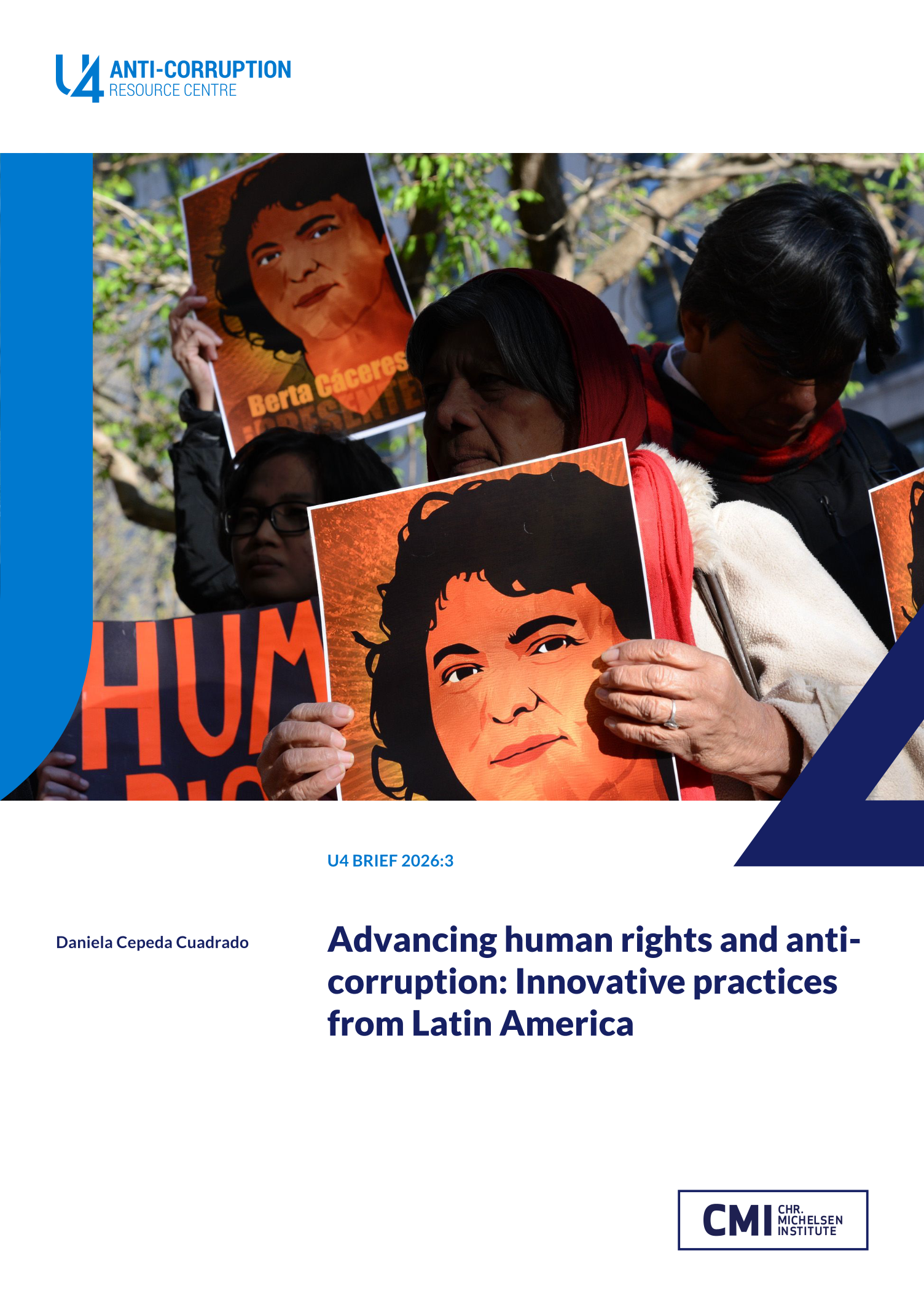
- Honduras’ Civic Council of Popular and Indigenous Organisations (COPINH) became the first civil society organisation (CSO) recognised as a corruption victim in the 'Fraud in the River Gualcarque' case. Their strategic litigation demonstrated the causal link between collusion in a dam project and violations of the Lenca Peoples’ rights.
- In Mexico, the CSO TOJIL has shown that corruption victims can claim collective harm, arguing that the Duarte bribery case violated the public’s right to live free of corruption. They have pursued victim status in both domestic and regional forums.
- In Venezuela, CSOs have linked breast cancer patients' lack of healthcare access to systemic corruption in the sector. With domestic litigation blocked by repression, they have turned to the Inter-American system.
- Development partners should support legal reform initiatives to recognise and redress corruption victims, fund research to better measure harm, invest in capacity-building programmes on strategic litigation, and create platforms for knowledge sharing.
- Organisations engaged in strategic litigation should build partnerships to advance their case, use advocacy strategies to increase visibility, recruit staff with relevant experience and understanding of the judicial system, and develop protection strategies for victims and staff in repressive contexts.