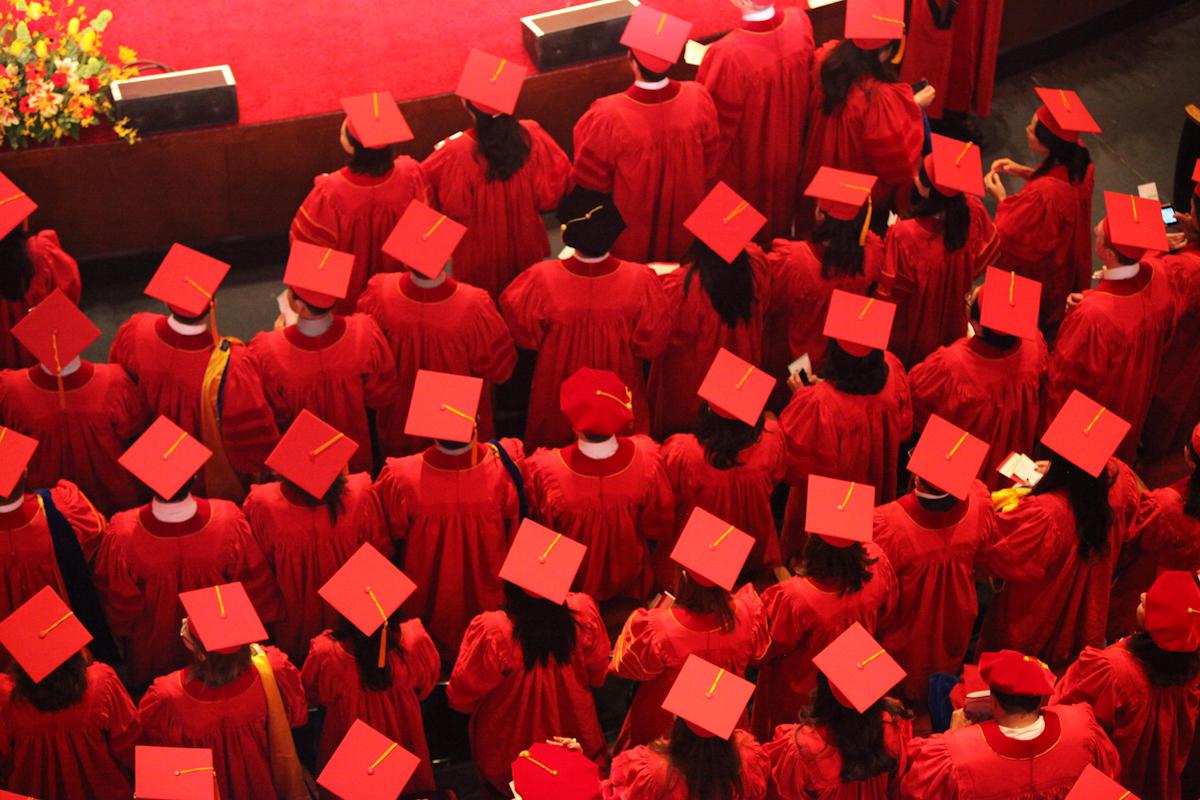
Corruption and fraud in higher education includes nepotism and favouritism, embezzlement, academic dishonesty, sextortion, and more. Development partners can support initiatives to strengthen academic integrity and university compliance with anti-corruption norms.
Blog
Universities as anti-corruption educators: but first, clean house
Higher education institutions are central to anti-corruption education, but they must also confront corruption in their own systems.
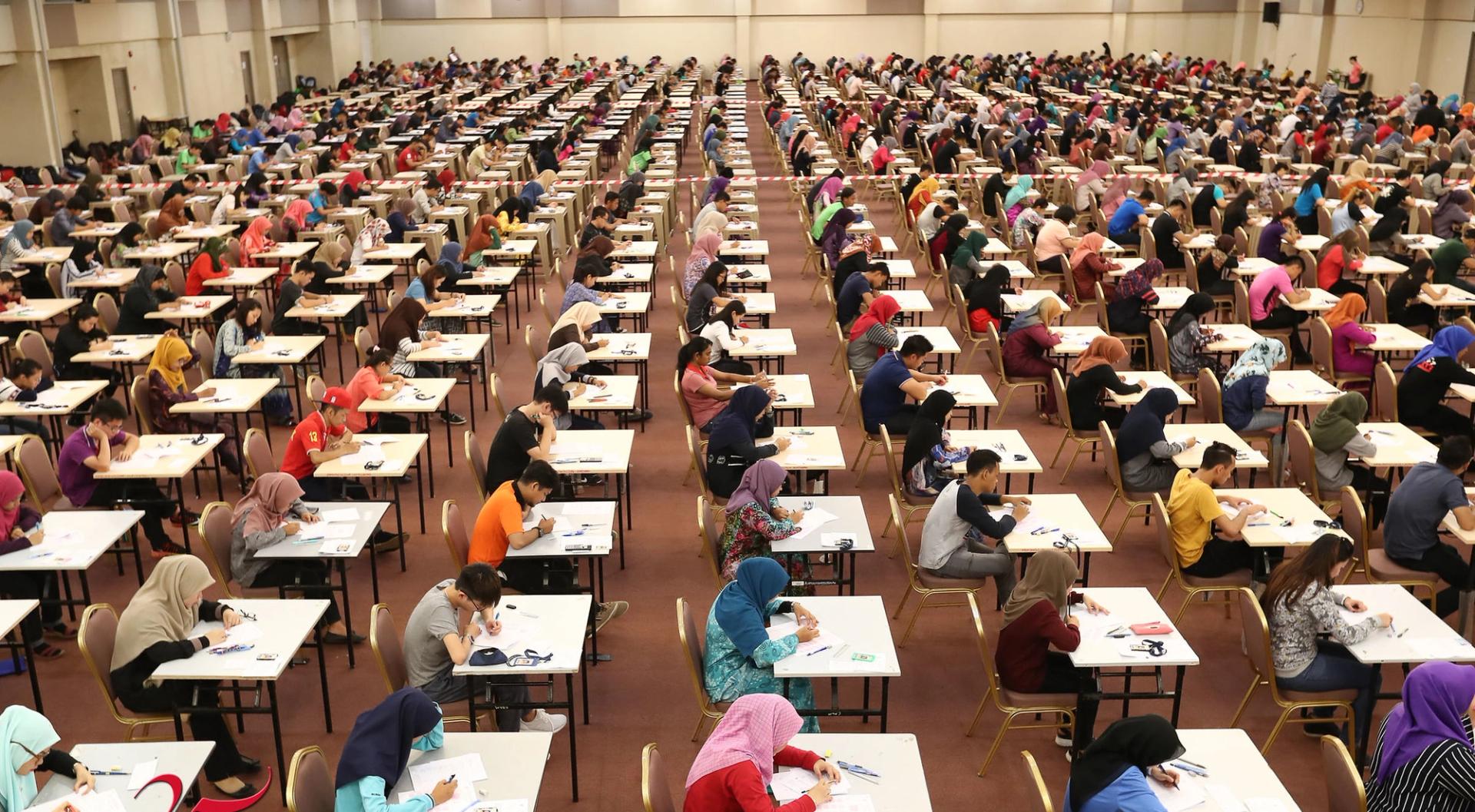
Higher education institutions need functioning integrity systems such as dedicated integrity offices, confidential reporting channels, and technology-supported reporting and detection. Photo:
UNIMAS/Flicker.com
CC BYUniversities are often cast as part of the cure for corruption. They teach ethics, train professionals and shape the next generation of public officials, researchers and citizens. The United Nations Convention against Corruption (UNCAC) reflects this ambition in recognising education as part of corruption prevention:
Article 13 calls for public participation in preventing and combating corruption, including through programmes in schools and universities. The 2025 Conference of States Parties Resolution 11/6 reinforces this by encouraging governments to teach ethical values, integrity, and anti-corruption to children and young people, and to connect this work to youth empowerment, civil society participation, and national anti-corruption strategies.
However, an uncomfortable paradox exists: while higher education institutions are expected to cultivate integrity, they are also vulnerable to corruption themselves. This is a global problem that affects universities in both developed and developing countries.
Corruption in universities undermines institutional credibility, weakens graduate employability, and reduces the value of degrees.e5e5f38e8341 It can place incompetent graduates in professions where poor training has serious consequences, including medicine. It also teaches a wider social lesson: that rules can be bent, qualifications bought, and privilege disguised as merit. Admissions secured through fraud or privilege exposes a deeper unfairness: it prevents higher education from living up to the meritocratic ideals on which it claims its legitimacy.ade0767dac65
Drivers of corruption in higher education institutions
Several intersecting factors drive corruption in the higher education institutions (HEIs), and these can be classified as structural, financial, and ethical.e3539e8fabdb High returns on education as a pathway to well-paid employment can prompt some to bribe or cheat for grades or recognised diplomas while low educator salaries increase employees’ susceptibility to bribes. Weak ethical norms and fragile rule-of-law contexts can also drive corruption in this sector, together with opaque governance structures.
The social obsession with merit and prestige attached to elite university admission generates intense status anxiety and competition, pushing parents to manipulate admissions and students to cut corners.c5b9efd262bf Some professors argue that the massification and internationalisation of higher education, competition for global rankings, hyper-competitive research cultures, geopolitical pressures, and cultural rationalisation drive corruption in HEIs.ad5870ff5105 They further maintain that contemporary higher education's own architecture – with its high-stakes admissions, academic promotion structures, and new technologies – creates conditions that prime institutions for corrupt practices at individual, institutional, and systemic levels.
A typology of corruption in higher education – risk areas
To make sense of the many ways corruption shows up in higher education institutions, it helps to look at four broad risk areas:bbd632946b26
1. Administrative and bureaucratic corruption
Administrative corruption includes bribery in accreditation, manipulation of admissions and international recruitment, mismanagement of accommodation, nepotism in staff appointments, absenteeism, embezzlement of research funds, and fraudulent procurement.
The form it takes varies by context. In parts of Eastern Europe and the former Soviet Union, bribery has affected admissions, grades, and degrees, often linked to low academic salaries and weak oversight. In the UK, Australia, Canada, and the USA, concerns include fabricated qualifications, preferential admissions, and impersonation in English language tests.
2. Academic fraud
Academic fraud includes plagiarism, essay and dissertation mills, fake degrees, falsified research, predatory journals, fake peer review, exam leaks, impersonation, and bribery to change grades. In Germany, a volunteer initiative called VroniPlag wiki exposed plagiarism in medical dissertations that universities had failed to detect.
Digital education has added another layer. The rapid shift to online learning during Covid-19 created new opportunities for academic dishonesty. Studies from universities in the USA and Romania suggest online exams increased cheating, though patterns differed. In Kazakhstan, corruption risks expanded from academic departments to the administrative units managing digital systems, especially as private universities expanded. This is consistent with discussions at the 2026 OECD Global Anti-Corruption & Integrity Forum, which highlighted that digitalisation can both reduce corruption and create new, more complex forms of corruption and fraud.
3. Political corruption
Political corruption is another major risk. It includes interference in university governance, misuse of higher education funds, favouritism towards private universities, unearned degrees for political allies, and influence over student politics. In parts of Eastern Europe, researchers describe this as ‘academic capture’, where officials who regulate higher education also have financial interests in the universities they oversee. Such threats to academic autonomy are not limited to lower-income countries; they have also been documented in Australia, Brazil, Hungary, Poland, Russia, Turkey, and the USA.
4. Sexual corruption
Finally, acts of sexual corruption are often missed in anti-corruption analysis because they do not involve money. Yet they involve abuses of entrusted power, where academic or professional opportunities may depend on submitting to unwanted sexual demands. At Makerere University in Uganda, research found sexual harassment to be widespread – protected by silence and institutional cultures that shield perpetrators. When such abuse is treated only as a welfare issue, rather than a governance failure, it remains invisible to anti-corruption systems.
Good practices in countering corruption in higher education
Some countries are making concerted efforts to address corruption in higher education. For example, Egypt has worked with the UN Office on Drugs and Crime to adapt anti-corruption education modules for universities across the MENA region. Armenia has employed an incentive-based approach to encourage HEIs to adopt comprehensive codes of ethics, tying compliance with these codes to eligibility for government financial support.
Furthermore, Kosovo – with EU support – introduced targeted corruption-prevention mechanisms and built the capacity of staff and students to recognise and respond to integrity challenges. In Nigeria, anti‑corruption education, clear penalty frameworks, plagiarism‑detection tools, and a name‑and‑shame policy have contributed to a 20% reduction in examination‑malpractice cases. In Germany, the volunteer-led VroniPlag Wiki platform showed that community-based oversight can succeed where institutional mechanisms fail.
Meanwhile, in South Africa, the North-West University has established a Community of Practice for Academic Integrity, promoting interdepartmental collaboration and engagement with national and international scholars to build a culture of academic integrity. And in the United Kingdom, several universities, such as the University of Liverpool, have implemented publicly available anti-corruption and bribery policies.
Regarding sexual corruption, Nigeria’s Independent Corrupt Practices and Other Related Offences Commission has promoted a model anti-sexual harassment policy for tertiary institutions, worked with civil society to develop a reporting app, and explicitly framed sexual harassment in universities as an abuse of power and a form of corruption. The Senate’s 2025 passage of the Sexual Harassment of Students Bill also signals growing legal and institutional recognition of the problem, although implementation will remain the real test.
Digital tools and AI are also being used to detect academic misconduct and fraud. In Romania, the Ministry of Education has mandated the use of plagiarism-detection software for final degree papers since the 2023–2024 academic year, recognising platforms such as Turnitin and iThenticate, while stylometric analysis and online proctoring tools are being piloted to address contract cheating and AI-generated content. At institutional level, Transilvania University of Brașov has complemented these measures with compulsory courses in ethics and academic writing, including guidance on the responsible use of artificial intelligence.
Collectively, these practices reflect nationally tailored efforts that combine preventive measures, enforcement mechanisms, legal frameworks, innovative oversight tools, and cultural change, demonstrating that there is no single blueprint for addressing corruption in HEIs.
From rules on paper to implementation
Addressing corruption in HEIs is ultimately a governance challenge requiring action at multiple levels. In most cases, the corrupt conduct is already prohibited under national law. The real problem is not the absence of laws but weak enforcement, entrenched institutional culture, insufficient whistleblower protection, and inadequate oversight – particularly as digitalisation advances and the private university sector expands.
A targeted agenda can build on existing foundations. National quality assurance agencies could include governance and integrity in their review criteria. UNCAC provisions could also be applied more effectively to:
- Promote merit-based appointments and reduce nepotism (Article 7)
- Support transparent procurement and research fund management (Article 9)
- Strengthen whistleblower protection (Article 33)
- Reinforce integrity standards in the growing private university sector (Article 12)
Regulators could also learn from each other by sharing practical, context-sensitive approaches.
At the institutional level, HEIs need functioning integrity systems. These may include dedicated integrity offices, confidential reporting channels, and technology-supported reporting and detection – while still protecting academic autonomy and professional judgement.
Together, these measures offer a starting point to move steadily from rhetoric to implementation.
- See Heyneman 2011. The corruption of ethics in higher education
- See Sandel 2020 The tyranny of merit
- See Hallak and Poisson 2007, pp. 40–41. Corrupt schools, corrupt universities: what can be done?
- See Sandel 2020 The tyranny of merit
- See Denisova-Schmidt et al. 2025.Contemporary higher education: an environment ripe for corruption
- See Kirya 2021 Curbing corruption in higher education
Disclaimer
All views in this text are the author(s)’, and may differ from the U4 partner agencies’ policies.
This work is licenced under a Creative Commons Attribution-NonCommercial-NoDerivatives 4.0 International licence (CC BY-NC-ND 4.0)