Ukraine must encourage broad-based domestic ownership of an open and collaborative policy arena to ensure sustainable anti-corruption progress.
Blog
European audiences do not need an overly positive story about anti-corruption in Ukraine. They just need a balanced one
European publics seem mostly unaware of the breadth of Ukraine’s ongoing anti-corruption reforms. Ukraine’s European partners have narrative frames to fix.

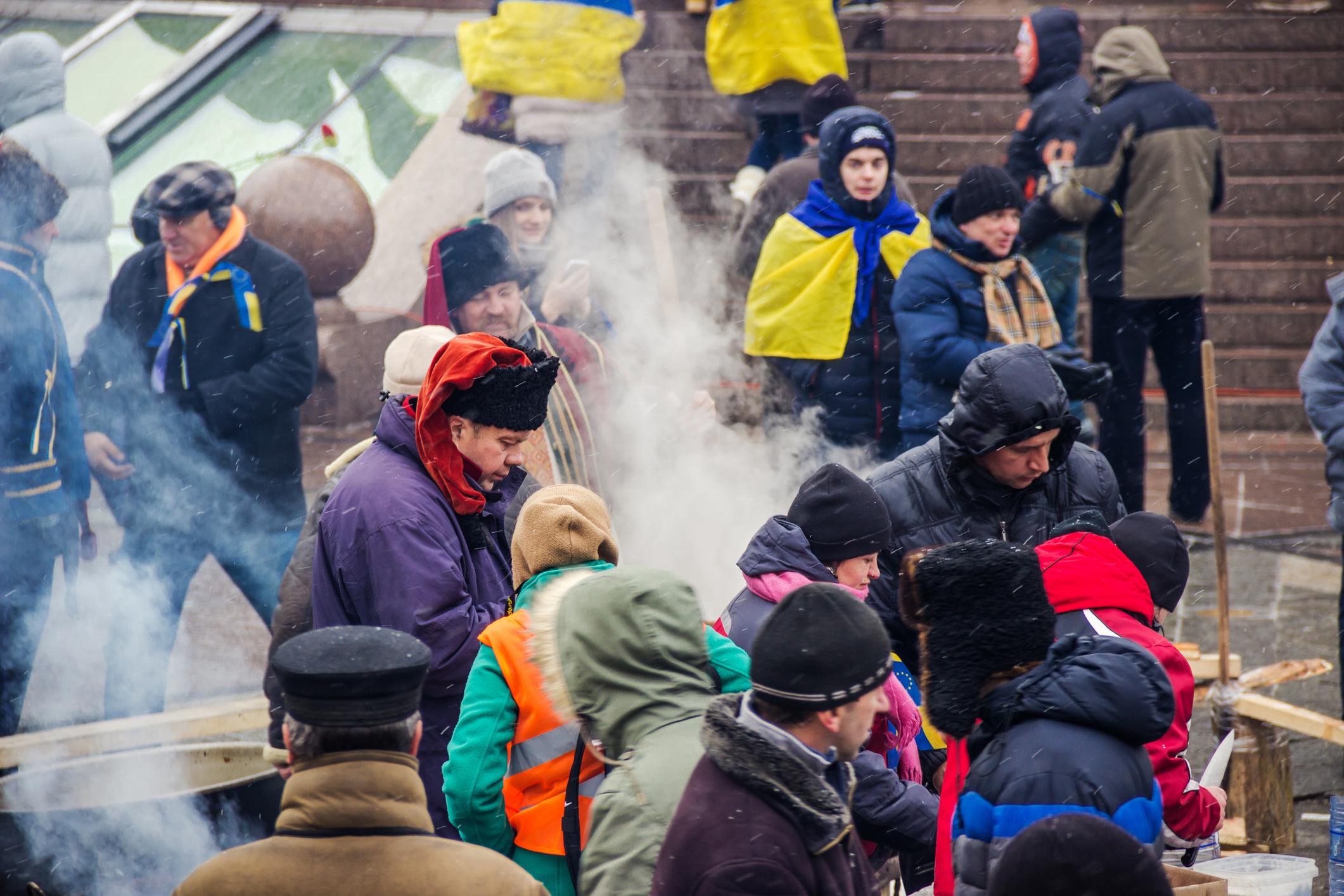
European audiences may see corruption, but not the systems that detect and address it. Ukraine's pioneering anti-corruption infrastructure deserves equal attention. Photo: U4 CC BY-NC-ND
Read almost any European newspaper's coverage of aid to Ukraine or listen to what questions European leaders are asked on television and they tend to intersect at some appoint questions around Ukraine’s trustworthiness. The subtext is easily grasped: continual unease around corruption, an anxiety rooted in the country’s collective reputation among European publics.
Corruption remains a major challenge in Ukraine, just as it does in many other European countries. But do persisting stereotypes continue to subtly distort the information that European publics receive? In other words, is Ukraine’s image trapped by past corrupt behaviour?
This blog argues that Ukraine needs international help to break free from imbalanced narratives. If not, ongoing anti-corruption progress may stall.
Lagging narratives and inherited reputations
Collective reputations – how outsiders perceive a country, community, or organisation – tend to lag behind actual events.
Communication researchers have shown how frames in the media, official statements, and political communication can trap collective reputations in the past by filtering out new information that does not conform to the narrative.
While the narrative framing around corruption and anti-corruption in Ukraine has become more nuanced since, for example, the Guardian had the headline: ‘Welcome to Ukraine, the most corrupt nation in Europe’. European publics are still sometimes fed stereotypes on Ukraine’s ‘old corruption problems’. Stereotypes of a corrupt Ukraine were most likely born over 30 years ago, in the 1990s – during the post-socialist transition. Contemporary populist politicians in Europe have used this outdated image to deny support to the country.
The persistent narrative frame of corruption as an endemic social problem steals attention away from the profound changes in Ukrainian society and politics over the last decade. While Ukraine has not stopped having corruption; it has become dramatically better equipped to expose and confront it. European publics need to see this more clear-sightedly. New frames of understanding are needed to balance the picture.
Ukraine growing as an anti-corruption pioneer
A first move could be to do away with the Ukraine in constant ‘catch-up’ framing. Big corruption scandals provoke calls from the international community that Ukraine ‘must do more’. No one disagrees that Ukraine needs further reforms, but people easily get an impression of Ukraine being in a state of perpetual deficit. That framing filters out how Ukraine is at the same time a pioneer in anti-corruption technology.
Those following Ukraine more closely will be aware how Ukraine's open digital procurement system – Prozorro – sets the pace for Europe: public tender data flows openly through a common electronic system, allowing businesses, journalists, state auditors and civil society to scrutinise spending. Through a combination of ideas, tech skills, and international backing, a network of innovators in Ukraine continues to invent new tools of democratic governance under conditions of war. Many countries have been learning from these innovations. In 2023, Estonia, usually portrayed as Europe's digital-government bright spark, announced it has built its national government e-service app, mRiik, partly using the code and design of Ukraine's 'state-in-a-smartphone' app, Diia.
European publics should gain reassurance that this ecosystem of independent analytical tools makes Ukraine’s reconstruction one of the most transparent in history.
Ukraine's integrity architecture is highly specialised
A second narrative frame relates to which aspect of a corruption scandal is emphasised. International communication tends to lead with the corruption problem, rather than the institutional response. Typically, news and commentators report that ‘Another corruption scandal in Ukraine is breaking…’ But the same outlets are likely to lead news from other western countries differently; ‘Today, authorities have discovered…’ , highlighting how the state is resolving the problem. This subtle difference downplays how Ukrainian authorities tend to move quickly.
This frame means that European citizens may see the corrupt act but not the detection and enforcement. A more balanced emphasis would be to equally recognise how Ukraine has developed a distinctive and specialised system to prevent and deal with corruption.
Ukraine meets 97% of its criteria for judicial-integrity regulation and 92% in practice, compared with OECD averages of 66% and 45%.
Where most western European countries rely on general police, prosecutors, and courts, Ukraine’s anti-corruption approach is distinctive because specialisation extends across the chain, from investigation and prosecution to a dedicated anti-corruption court. This allows expertise to accumulate and creates mutually reinforcing accountability across each stage of the justice process, a system that is bearing fruit. In 2024 alone, two key institutions within the system, the National Anti-Corruption Bureau of Ukraine (NABU) and the Specialised Anti-Corruption Prosecutor's Office (SAPO), started 658 new criminal cases. Careful measurement by organisations like the OECD validates the effectiveness of institutional reform. For example, Ukraine meets 97% of its criteria for judicial-integrity regulation and 92% in practice, compared with OECD averages of 66% and 45%.
Ukrainians don't just support anti-corruption reform – they defend it
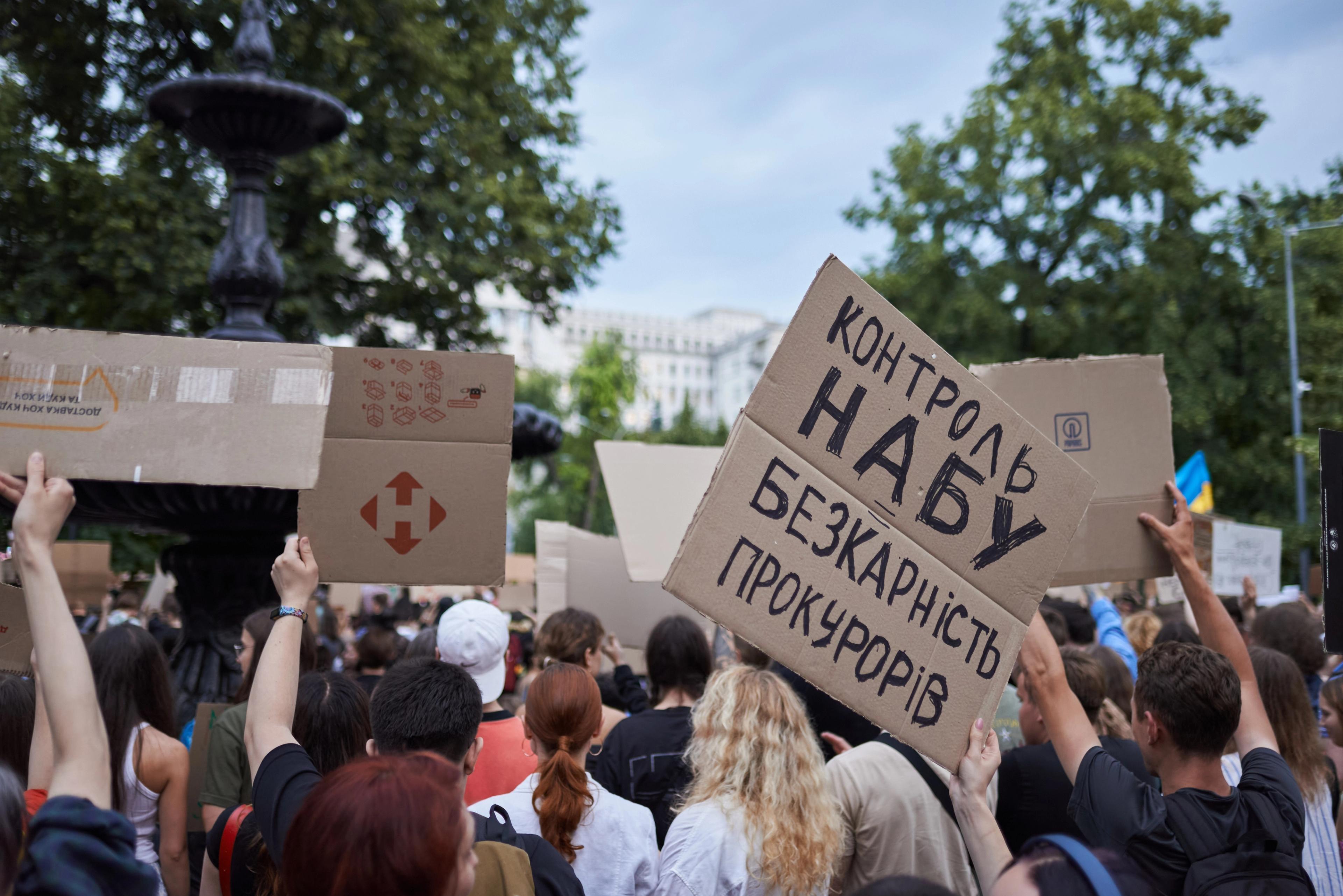
Ukraine has a growing social constituency for integrity. This has been building: the share of Ukrainians strongly rejecting corrupt practices has risen from 43% in 2017 to 58% in 2024, while the proportion of those encountering corruption who actually report it has almost tripled since 2020. Podcasts and TV shows on anti-corruption are popular in Ukraine, whereas in Western Europe these issues are not much discussed. That changing social norm became dramatically visible when the July 2025 protests over attempts to weaken NABU and SAPO were among the largest demonstrations since Russia's full-scale invasion.
More balanced information can strengthen progress
A collective reputation reflecting Ukraine’s good work so far will help foster a more resilient approach to anti-corruption.
Democratic transitions in Eastern Europe are sustained in part by transnational coalitions and cooperation beyond official EU initiatives. The collective perceptions of Ukraine among European publics influence the willingness of politicians, universities, organisations, journalists, and businesses to invest in long-term cross-border partnerships. Highlighting Ukraine’s positive anti-corruption progress will strengthen the social legitimacy of engaging with Ukraine. Deeper transnational networks help diffuse, support, and sustain governance reforms.
If supporters of Ukraine leave European publics in the dark about progress, the type of anti-corruption efforts that get pushed will likely be limited to risk averse, technical, and compliance-based activities. But what is needed is a more comprehensive anti-corruption approach. At the U4 Anti-Corruption Resource Centre, we have consistently argued for a bold approach that considers social norms, sectoral approaches, deeper forms of prevention, and stronger forms of domestic ownership.
Expansive anti-corruption requires patience and long-term thinking which is hard to do under the weight of mistrust.
Ukraine does not need better PR on corruption. It needs its progress to be seen
Changing an outdated narrative requires a steady accumulation of credible evidence. Experimental research2a7bd43a3a3b found that repeated exposure to a news frame produces stronger and more persistent effects than one-off exposure. So European partners should make anti-corruption progress a routine part of Ukraine communications.
New forms of reporting are emerging. The Norwegian state broadcaster reported that Ukrainian’s support of anti-corruption shows results and the Swedish counterpart has emphasised how important anti-corruption is to Ukraine’s future. But more needs to be done.
Sharing news about anti-corruption progress should emphasise the different facets of what has been achieved with international support given to Ukraine so far, in collaboration with Ukrainian authorities and citizens. Wide-ranging evidence then matters beyond a few shiny stars. Endlessly communicating how amazing Prozorro is will only go so far: classic experiments on how stereotypes persist show that people are quick to create exceptions rather than update their understanding.
Communicating stories that make anti-corruption feel lived and local is important: about the mayor publishing his city's spending so outsiders can interrogate it; a businessman offered a role in a multimillion-dollar bribe goes to investigators instead; and how thousands of officials, businesses and civic monitors routinely interrogate open procurement data.
Finally, changing Ukraine’s reputation cannot be a government-led exercise alone. Credible messengers matter. Ukraine’s European partner governments can invite the Ukrainian diaspora, independent Ukrainian journalists and CSOs, as well as European businesses operating in Ukraine to communicate updates.
- Lecheler, S., Keer, M, Schuck, A. R. T, and Hänggli, R. (2014).
Disclaimer
All views in this text are the author(s)’, and may differ from the U4 partner agencies’ policies.
This work is licenced under a Creative Commons Attribution-NonCommercial-NoDerivatives 4.0 International licence (CC BY-NC-ND 4.0)
Keywords
Photo
Photo: U4 CC BY-NC-ND